


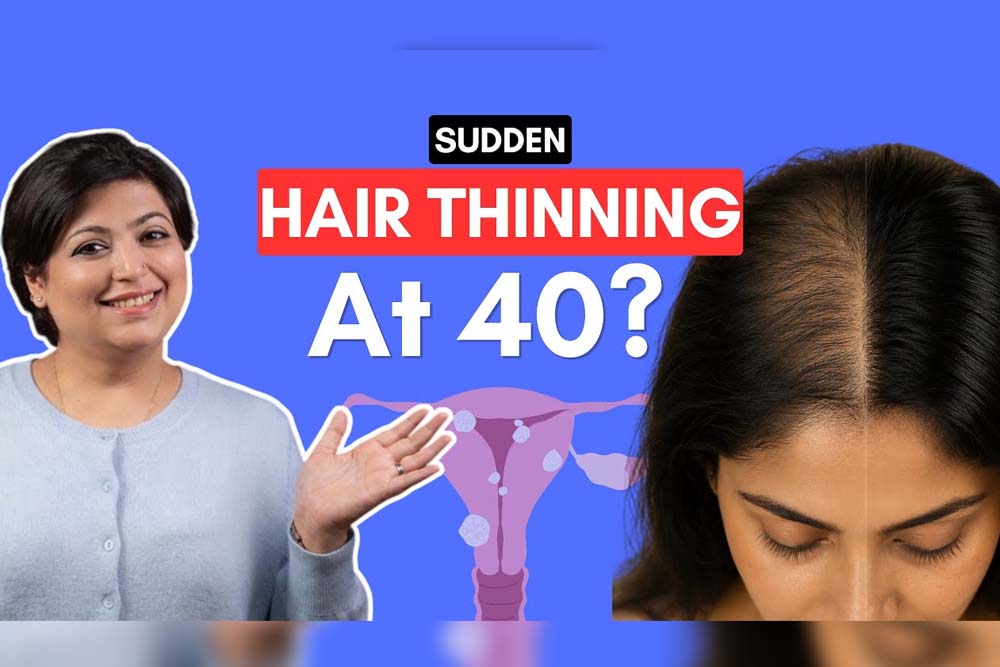
Perimenopausal Hair Thinning: Why It Happens and the Multi-Pronged Approach That Works
Hair thinning that shows up around your 40s, in the years leading up to menopause, is genuinely different from the hair fall younger adults typically deal with and it needs a different approach entirely. If you're researching the right treatment in Delhi for this specific kind of hair thinning, understanding why it happens changes how you approach fixing it.
Why Perimenopausal Hair Thinning Happens
Around age 40, estrogen levels begin declining while male hormones become comparatively more dominant. Thyroid changes often coincide with this same window, and stress which tends to compound during this life stage adds further pressure on hair health. All of this together reflects directly in your hair, causing gradual thinning, and hair that feels lifeless, dry, frizzy, and brittle.
This differs from male pattern hair loss in presentation men typically see a receding hairline, while women notice their parting gradually widening and hair becoming progressively weaker and more brittle throughout.
It's worth being honest here heavy keratin treatments, frequent hair colouring, and regular use of heat styling tools do contribute to damage, and that's genuinely true. But the underlying mechanism in hormonal thinning is different: hair follicles are actually shrinking in diameter, which is why hair becomes progressively thinner and eventually stops growing altogether. The follicle itself is miniaturising, receiving less blood supply, and experiencing increased oxidative stress none of which styling habits alone can fully explain.
Sign | What's Actually Happening |
Widening parting, weaker strands | Hair follicle diameter shrinking |
Dry, frizzy, brittle texture | Reduced blood supply, oxidative stress at follicle |
Attributed to styling habits alone | Often actually hormonal miniaturisation |
Supplements Worth Considering: Phytoestrogens
Standard deficiencies iron, Vitamin D, B12still need addressing, and biotin can be included too. But it's important to understand that biotin alone typically won't resolve hormonal thinning, since the underlying cause usually isn't a biotin deficiency in the first place.
Phytoestrogens are genuinely worth prioritising here these are supplements that mimic estrogen, making them a good option for anyone not ready or willing to start hormonal medication. Ashwagandha stands out as one of the most well-known phytoestrogens, helping reduce follicle miniaturisation, improve blood supply, and lower oxidative stress all contributing to healthier hair growth.
Beyond ashwagandha, the phytoestrogen family includes soy isoflavones, flaxseed, and sunflower seed extracts all reasonable options for those wanting to start with something gentler before considering hormonal tablets.
Another phytoestrogen worth knowing about is beta-sitosterol, which works differently it inhibits the 5-alpha reductase enzyme responsible for converting testosterone into DHT (the same mechanism relevant in male pattern baldness). This also reduces localised inflammation around the follicle, which otherwise weakens it further and restricts blood supply.
Phytoestrogen | Mechanism |
Ashwagandha | Reduces follicle miniaturisation, improves blood supply |
Soy isoflavones, flaxseed | Mild estrogenic support |
Beta-sitosterol | Inhibits DHT conversion, reduces inflammation |
Omega-3, Vitamin D, and N-acetyl cysteine also support follicle strength and hair growth as part of this broader supplement strategy.
Plant Protein Over Whey
For anyone using protein supplements, switching from whey to plant protein genuinely helps with perimenopausal thinning specifically. Pea protein supports keratin building and collagen synthesis while improving iron absorption. Soy protein is worth considering too, since it helps lower DHT levels through its mild estrogenic effect directly relevant to this specific type of hair loss.
Why Normal Blood Reports Don't Rule This Out
This comes up constantly in consultations patients whose periods are regular and whose blood work and ultrasound come back completely normal are often surprised to hear their hair thinning is still hormonal. It's genuinely important to understand that this kind of hormonal disturbance often happens at the cellular level, specifically at the scalp and follicle, without necessarily showing up in standard blood tests. A normal report doesn't change the diagnosis the issue is circulating hormones acting locally at the follicle level, which requires treatment targeted at that level rather than waiting for blood work to confirm something it may never show.
At-Home Treatments Worth Starting
Derma rolling remains one of the most accessible options using a 0.25mm roller twice a week before applying your serum genuinely boosts absorption and improves local blood supply, making whatever serum you're using noticeably more effective than applying it alone.
For serums, minoxidil is well-known but comes with a genuine caveat it typically causes an initial shedding phase, and if you ever stop using it, the hair gained through consistent use will fall out again, which can be genuinely discouraging. As an alternative, serums with Redensyl, Procapil, and similar molecules avoid this shedding phase while still improving density. Some newer formulations combine these with finasteride or dutasteride for topical, local application offering the anti-androgen benefit relevant to hormonal thinning without needing to take an oral tablet.
Low-Level Laser Therapy (LLLT), available as a cap, works at the cellular level specifically at the mitochondria supporting cell repair and regeneration, and helping dormant follicles shift from a resting phase into active growth. Just 10 minutes daily is genuinely all it takes.
At-Home Treatment | How It Helps |
Derma rolling (0.25mm, 2x/week) | Boosts blood supply, improves serum absorption |
Redensyl/Procapil serums | Improves density without shedding phase |
LLLT cap (10 min/day) | Cellular-level repair, shifts follicles into growth phase |
Prescription Options and In-Clinic Treatments
Minoxidil tablets are now available as an easier alternative to the lotion, though the same initial shedding phase still applies. Spironolactone and finasteride tablets, both hormonal medications, work well for perimenopausal thinning specifically, and combination tablets pairing spironolactone with minoxidil are also available now.
For in-clinic treatments, PRP has become somewhat dated and less effective by comparison. GFC (Growth Factor Concentrate) is a genuine step up, delivering growth factors directly from your own blood platelets. Folliqume is another strong option a cocktail of botanical extracts, stem cells, and boosters delivered superficially into the scalp, either by injection or via derma pen for those wanting to avoid needles.
Exosomes deserve particular mention here they've become genuinely popular for both skin and hair, and newer, third-generation exosomes are signal-driven, meaning they carry specific instructions to the cell stop hair fall, boost blood supply, shift follicles into active growth. This messenger-like function makes exosome results genuinely distinct from other treatments.
In-Clinic Treatment | Mechanism |
GFC | Growth factors extracted directly from blood platelets |
Folliqume | Botanical extracts, stem cells, boosters delivered superficially |
Exosomes (3rd gen) | Signal-driven messengers directing follicle-level action |
When Thinning Has Progressed Significantly
For those who've delayed addressing this and reached a more advanced stage where supplements genuinely won't be enough, scalp micropigmentation and hair transplant become the remaining options. Female hair transplants differ significantly from male ones, given the different thinning pattern widening part rather than receding hairline and are approached accordingly. Scalp micropigmentation, essentially a permanent tattoo-like pigment matched to your hair colour, creates a camouflaging effect in areas of significant thinning, making hair appear denser.
Common Misconceptions Worth Clearing Up
Biotin alone won't fix this. Gummies are maintenance products, not treatment. Oiling alone offers no added advantage rosemary oil has some benefit, but not enough on its own to meaningfully address hormonal thinning.
As for reversibility genuinely, yes, to a meaningful extent. This isn't the kind of hair loss where the follicle is permanently destroyed through scarring; it's miniaturisation, which responds to sustained effort. That said, it's honest to say results may not fully restore hair to exactly what it was a decade ago, since the underlying hormonal imbalance itself can't be completely eliminated but consistent effort genuinely shows visible difference.
Smoking deserves a specific mention it raises male hormone levels and accelerates follicle damage, meaning it directly worsens hormonal hair thinning.
Getting Personalised Guidance
This kind of layered, multi-pronged approach supplements, at-home devices, and in-clinic treatment working together is exactly the strategy discussed in detail during consultations at Dadu Medical Centre. If you're experiencing thinning in your 40s despite normal blood work, consulting a dermatologist in Delhi can help you build a treatment plan that addresses the hormonal reality at the follicle level, rather than waiting for lab results to justify treatment.
For anyone exploring a proper hair clinic in Delhi for perimenopausal hair thinning, understanding that this genuinely needs a combined approach not a single supplement or serum makes that first consultation far more productive.
Final Thoughts
Perimenopausal hair thinning is a genuine hormonal shift, not simply a sign of ageing or product damage, and it responds best to a combined strategy the right supplements, consistent at-home care, and in-clinic treatment where needed. Results take real, sustained effort, but they're genuinely achievable with the right, layered approach.
Comments (0)
Loading comments...